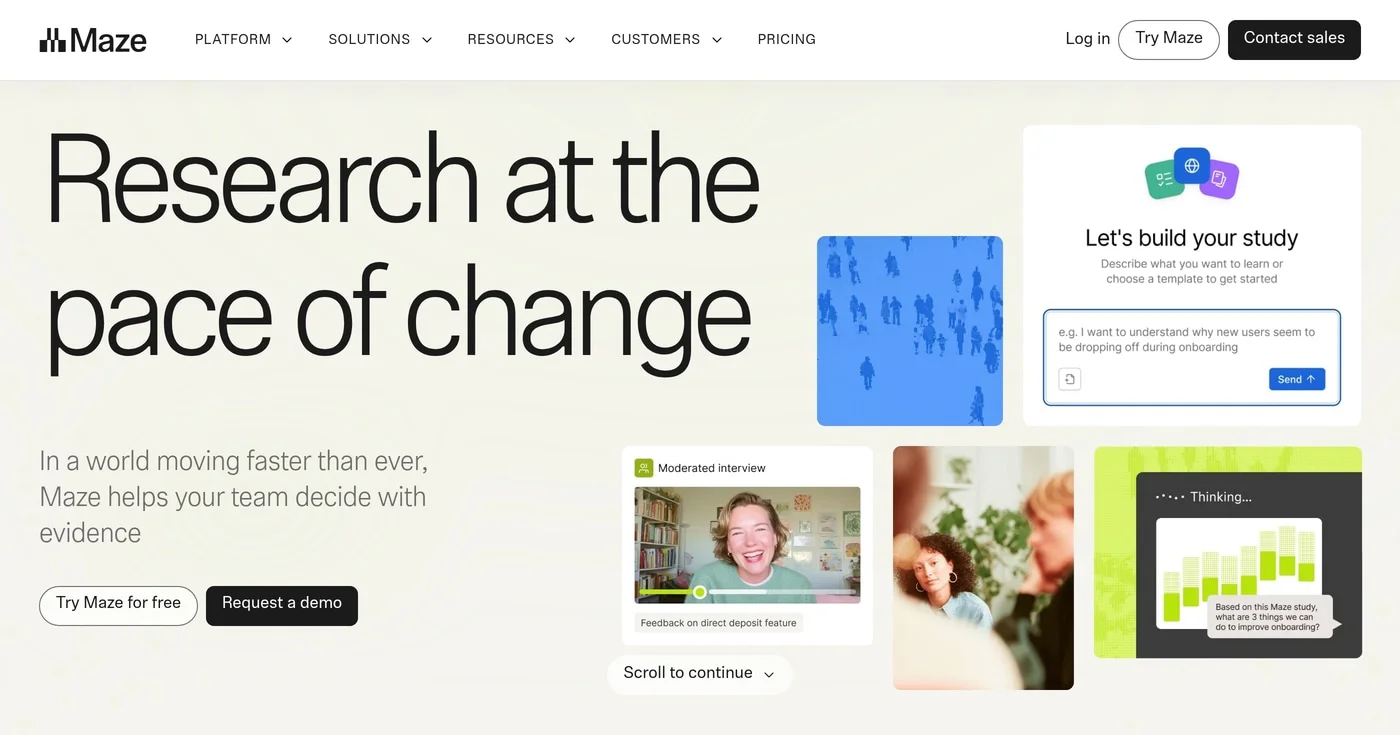
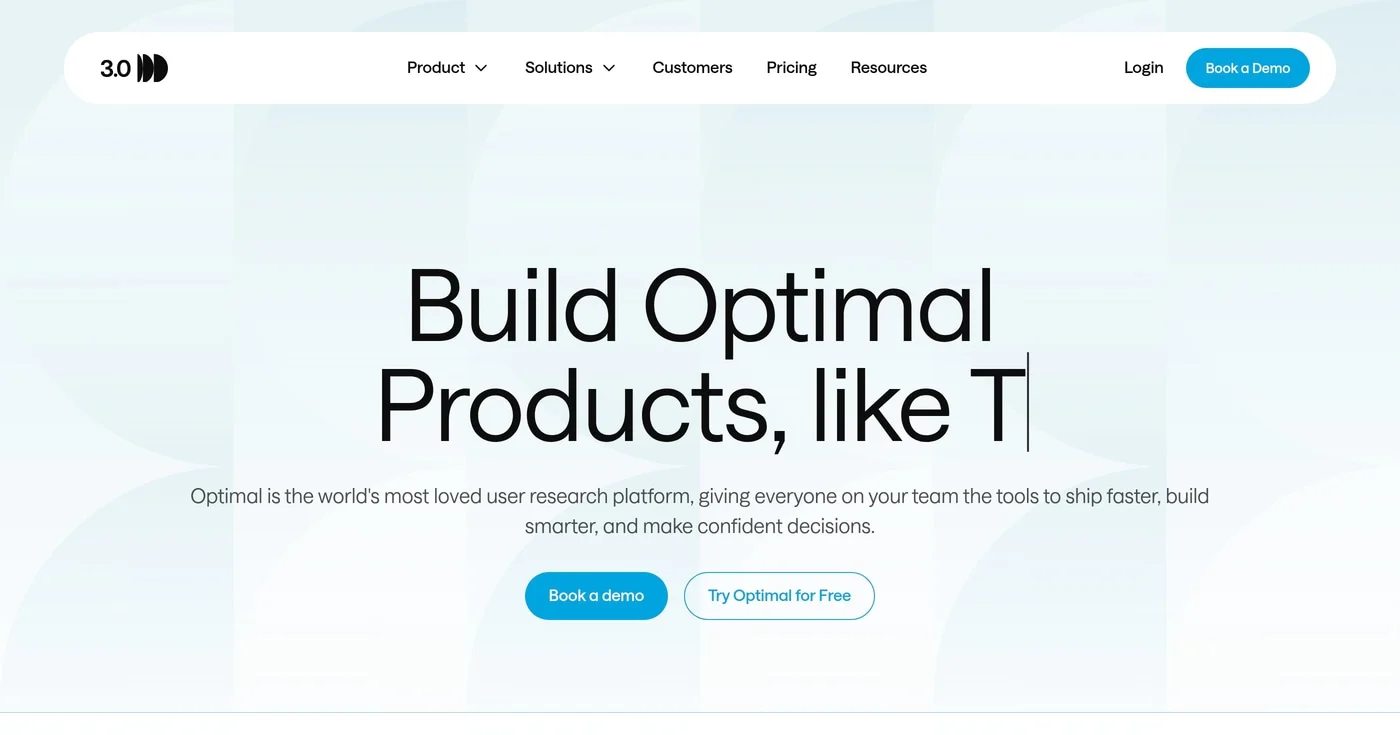
Pricing reflects participant incentives and tool usage. Recruiting costs via platforms like UserInterviews or Maze's panel are separate.
User Interviews
User interviews are semi-structured conversations that uncover motivations, pain points, and mental models. They're qualitative, primarily attitudinal, and generative.
The key technique rule, per Formbricks: "Tell me about the last time you tried to accomplish X" is more reliable than "Would you use a feature that does Y?" Behavioral recall outperforms hypothetical scenarios. You should treat the interview guide as a topic checklist, not a script.
u/jesstheuxr in r/UXResearch puts it well:
"Think of your interview guide as just that, a guide. It's what you want to cover, but don't be so dogmatic in following it that the conversation feels scripted and forced down a specific path. Really listen in the moment to what someone is saying, ask relevant follow up questions, confirm your understanding."
u/jesstheuxr in r/UXResearch (March 2026)
Usability Testing
Usability testing observes users interacting with a prototype or live product to surface usability problems. It's qualitative, behavioral, and evaluative.
5 participants in qualitative testing surface approximately 85% of usability issues, per the Nielsen-Landauer model. Jakob Nielsen's direct advice: "The best results come from testing no more than 5 users and running as many small tests as you can afford."
For quantitative benchmarking at statistical confidence, the threshold rises to 40 participants.
Task design matters. "Find and export your monthly report" (user goal) beats "click the export button" (UI action). The usability testing guide covers session planning, think-aloud protocol, and the 7 main testing variants in detail.
Surveys
Surveys are structured questionnaires that collect attitudinal data at scale. They're the most scalable method for quantifying sentiment, measuring change over time, and segmenting users by behavior.
The trade-off is depth. Surveys capture what users think, not why.
Krosnick (1999) documented "satisficing" in survey methodology: respondents give acceptable-but-inaccurate answers to minimize cognitive effort. Question design is the research quality lever here, not sample size.
Teams often run surveys alongside analytics to triangulate attitudinal and behavioral data, precisely because neither source alone closes the gap.
Card Sorting
Card sorting asks participants to organize content into categories. Open card sorting (participants create categories) reveals how users expect your information to be organized. Closed card sorting (predefined categories) validates an existing IA structure.
Optimal Workshop, the leading IA testing platform, counts Netflix, LEGO, and Apple as card sorting clients. NNgroup's card sorting guide states it precisely: card sorting "uncovers users' mental models of the information architecture of your digital product." Run open sorting first, then closed to validate.
Tree Testing
Tree testing measures whether users can find specific items in a text-only navigation hierarchy, without visual design influencing behavior. It's behavioral, evaluative, and the natural follow-on to card sorting.
Success rate and time-on-task are the key outputs. If card sorting defined the structure, tree testing validates whether it works before visual design begins. Optimal Workshop and Maze both support tree testing with panel access included.
Diary Studies
Diary studies ask participants to self-document experiences in their natural environment over 1-4 weeks. They're qualitative, behavioral, and longitudinal.
Use them for infrequent or episodic behaviors, understanding how product use changes with familiarity, or mapping the full lifecycle of an experience. The trade-off is participant commitment and analysis volume. Dscout is the leading platform for in-the-moment and diary research, particularly strong for B2B longitudinal work.
Contextual Inquiry
Contextual inquiry places you alongside participants in their natural working environment while they complete real tasks. It's qualitative, behavioral, generative, and has the highest ecological validity of any research method.
Contextual inquiry surfaces hidden friction and unexpected workarounds that users don't report in interviews because they don't realize they've built them. Userlytics (2026) puts it well: "Often the most revealing insights in contextual inquiry are the workarounds participants have built without realizing they're workarounds."
A/B Testing
A/B testing randomly deploys two interface variants to two user groups and measures which performs better on a defined metric. It's quantitative, behavioral, and evaluative.
Teams often combine A/B testing with heuristic evaluation to validate both design quality and quantitative performance. A/B testing reveals what works without explaining why, which is precisely why it pairs well with qualitative research on the same question.
Heuristic Evaluation
Heuristic evaluation is an expert review of an interface against established usability principles, typically Nielsen's 10 heuristics. It's qualitative, expert-judgment-based, and formative.
The advantages are low cost and no participant recruiting. Best results come from 3-5 evaluators working independently and aggregating findings. The limitation is evaluator dependency: heuristic evaluation can miss user-specific issues that field observation surfaces.
Eye Tracking
Eye tracking measures visual attention and gaze patterns during product use. It provides objective data on what users look at and for how long.
NNgroup's caution is important: eye tracking data "don't tell us what the user is really thinking or feeling." Pairing eye tracking with think-aloud protocol produces the richest combination of behavioral observation and attitudinal explanation. It's also one of the more expensive methods to run well.
Analytics and Session Recording
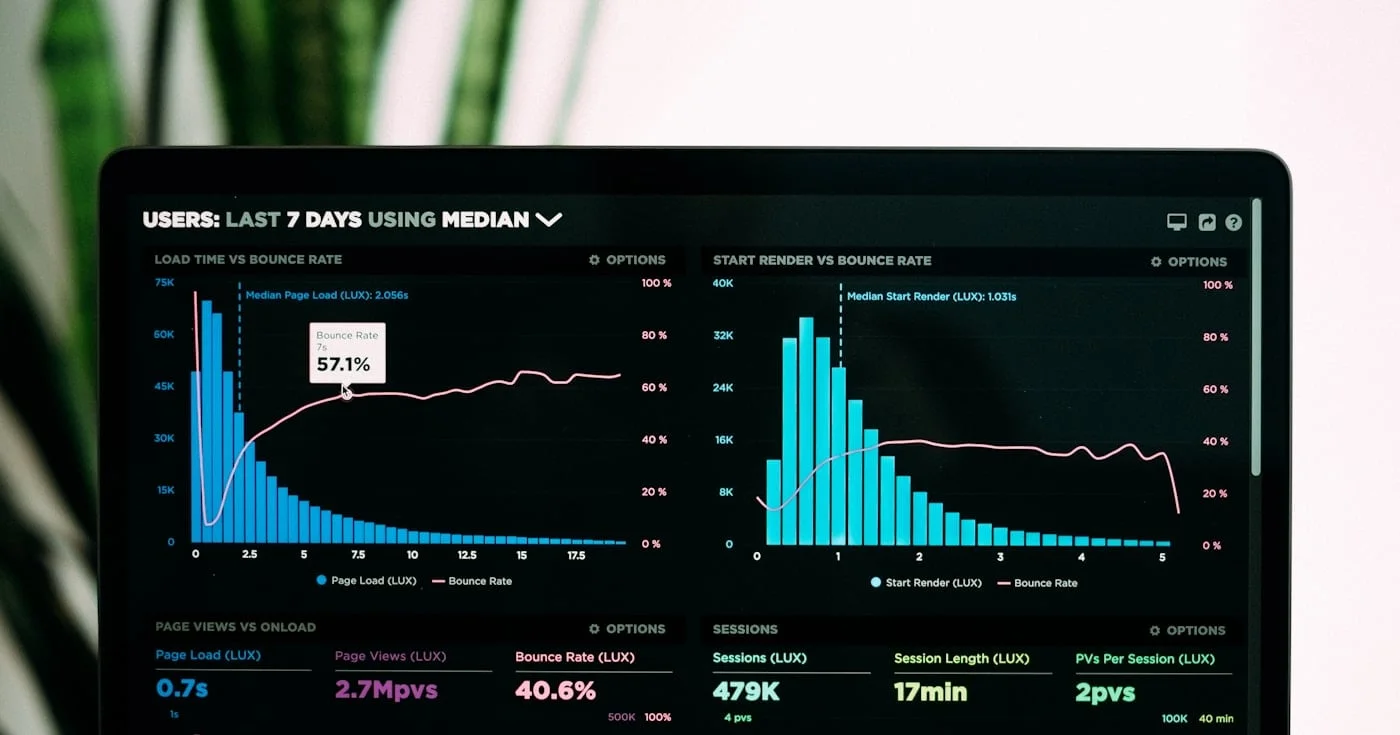
Analytics provide passively collected behavioral data at scale: page views, clicks, funnels, session recordings, and heatmaps. They're quantitative, behavioral, and most valuable post-launch.
The fundamental limitation mirrors the attitudinal-behavioral gap: analytics shows what users do, not why. That limitation is the primary practitioner rationale for running qualitative research alongside quantitative monitoring. The ux-statistics data on ROI benchmarks and behavior patterns gives useful context on how behavioral data translates to business outcomes.
First-Click Testing
First-click testing measures where users click first on an interface to complete a given task. It’s behavioral, evaluative, and fast. First-click accuracy is highly predictive of overall task success, making it a useful quick-validation method early in prototype testing.
Mixed Methods: Strategic Integration, Not Addition
According to Maze's 2026 research, surveys (77%), usability testing (75%), and moderated user interviews (71%) remain the most widely used methods - and most mature teams combine at least two. But combining two methods is not the same as mixed-methods research.
NNgroup's 2025 mixed-methods guide draws the distinction precisely: true mixed-methods research requires that qualitative and quantitative data are designed to answer the same overarching research question from complementary angles. Adding a survey to interviews does not qualify.
Three mixed-methods designs that work:
Explanatory sequential. Quantitative benchmarking first, qualitative to explain findings. Run a task-success study to identify where users struggle, then run moderated sessions to understand why.
Exploratory sequential. Qualitative exploration first, quantitative to validate at scale. Discover themes in interviews, then survey 300+ users to measure how widely those themes apply.
Convergent/parallel. Both streams run simultaneously, integrated in analysis. Use when you need speed and want triangulation rather than sequential confirmation.
NNgroup's hotel website case study is the clearest practitioner example: a quantitative benchmark study measured task success and completion times; a qualitative usability session then focused on tasks where users struggled most. Quantitative guided what to investigate. Qualitative explained why the patterns occurred.
On r/UXResearch, practitioners who describe themselves as "most confident and most employed" lean mixed-methods by default: qualitative to generate hypotheses, quantitative to validate at scale. That combination also doubles as career resilience in a contracting UX job market.
AI-Assisted UX Research Methods
AI tools have entered UX research across three distinct tasks, each with different evidence and practitioner reception.
AI-assisted transcript synthesis. Tools like Dovetail, Looppanel, and Notably use AI to draft initial theme clusters from raw interview notes. Reddit practitioners describe this as "a huge help for the mechanical parts" of synthesis: finding patterns across dozens of sessions that would otherwise take days of manual coding. Human judgment for interpretation and prioritization remains non-negotiable.
AI-moderated interviews. Platforms like Perspective AI handle scheduling, recording, transcription, and structured probing at scale. The limitation, per practitioners on r/UXResearch: "The AI handles logistics well but misses the nuance required to probe an unexpected participant answer in real time." Use for volume; use humans for depth.
Synthetic users. The most contested frontier. UserInterviews published a State of Synthetic Users Report in 2026, signaling industry-wide attention.
NNgroup's position, stated on X in July 2024: "In UX, real-user research is crucial. Beware of synthetic users and AI findings. They're hypotheses, not facts." AI-generated participant responses are starting-point hypotheses, not validated research data.
Dscout on LinkedIn (2026) identified a subtler AI pressure: the expectation of "more research" rather than more meaningful research. AI tooling creates throughput capacity that, without intentional boundary-setting, drives quantity over rigor. That's a research management challenge first, and a tooling decision second.
How to Choose the Right UX Research Method
Three variables determine the right method for any research question.
Your Research Question First
Every method answers a different question type. Matching method to question is the most important selection decision.
Your Product Phase
NNgroup's Discover-Explore-Test-Listen framing is the simplest shortcut:
- Discover: User interviews, contextual inquiry, diary studies, field studies
- Explore: Card sorting, concept testing, lo-fi prototype testing, heuristic evaluation
- Test: Moderated and unmoderated usability testing, tree testing, A/B testing, first-click testing
- Listen: Analytics, session recording, continuous surveys, benchmarking studies
Your Constraints
Budget and timeline are real inputs, not excuses. Low budget and fast timeline point toward heuristic evaluation, unmoderated testing, and surveys.
Higher budgets unlock moderated sessions, diary studies, and eye tracking. For B2B and niche professional audiences where cold outreach yields poor results, snowball recruiting (asking each participant for referrals) builds the panel faster than any panel platform.
Getting Research Used: The Organizational Layer
Getting findings used is the hardest part of UX research.
Both Reddit practitioners and LinkedIn voices identify this as the dominant pain point. No current SERP competitor's methods guide addresses it.
Rebecca Harper of Optimal Workshop, on LinkedIn (2026):
"There's this whole realm of change management and interpersonal communication skills that we need to harness as well, so that we can go out and have those productive conversations with 10 different people, and more, and get that organizational alignment."
Rebecca Harper, Optimal Workshop on LinkedIn (2026)
Three practices that work:
Maintain a decision log for skipped research. Write down every research step skipped and name the risk explicitly. Reference the log in post-mortems. This builds institutional memory without assigning blame after a product decision goes wrong.
Frame findings as business outcomes. Stakeholders deprioritize research under delivery pressure because they measure success in outputs (on-time delivery), not outcomes (product performance). Connecting a usability finding to a conversion metric or retention rate changes the conversation.
Use snowball recruiting. At the end of every study, ask participants for referrals to similar people for future research. This is especially effective for B2B and professional audiences where panel quality is low and cold outreach fails.
u/vaderprime in r/userexperience frames the right disposition toward acting on findings:
"Patterns are a starting place and they're useful for those who do not have access to user testing. If you didn't intend to iterate your design based on what you observed and learned in the test, then what's the point of testing? You should observe and iterate, and test again."
u/vaderprime in r/userexperience (2025)
Common UX Research Mistakes to Avoid
Defaulting to Familiar Methods
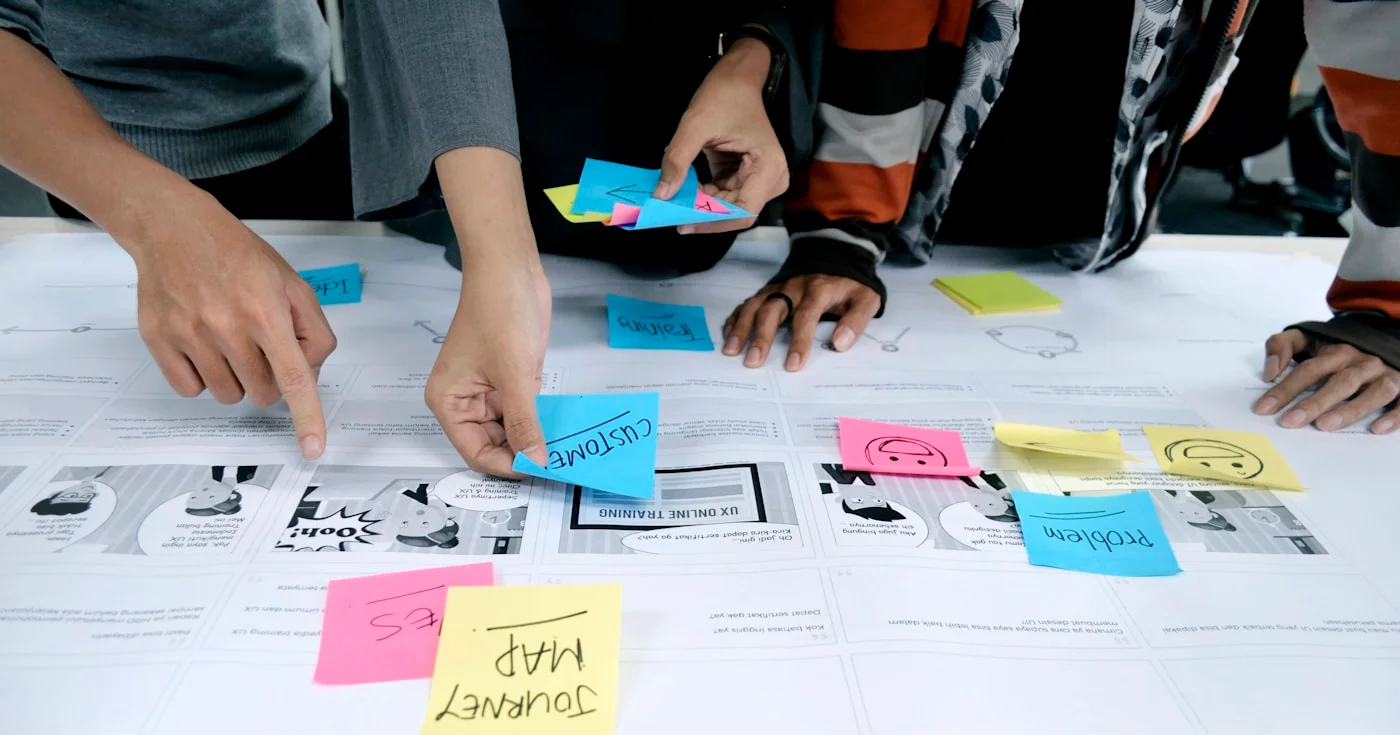
Surveys and sticky notes are not a research strategy. Method selection should be driven by the research question and product phase, not by what's easiest to run or explain to stakeholders.
NNgroup's April 2025 post made the point plainly: "UX research ≠ just sticky notes & surveys. Choose the right method for each stage of the design lifecycle."
Falling into the "Show and Tell" Trap
Showing a design to users and asking "what do you think?" produces opinion data, not behavioral data. The question invites evaluation of aesthetics, not observation of behavior.
You should direct the user to try to accomplish something, then observe. As NNgroup's video guide frames it: "When you have design concepts it's tempting to just show it to users and ask what they think. Instead, direct the user to try and actually do something."
Applying Statistical Tests to Qualitative Data
Running a t-test on 8 usability participants is, as u/ResearchGuy_Jay in r/UXResearch put it: "technically possible but practically meaningless. You'd be adding false precision to directional data." Qualitative research is designed for pattern recognition at small N. The skill is knowing when a pattern is strong enough to act on, not applying statistical tests to every data set.
Treating AI Output as Validated Research
Synthetic users and AI-generated participant responses are hypotheses for testing, not validated research findings. NNgroup's position is firm: treat them as starting points for real research. Running real user research is still the only way to validate behavioral data.
Ignoring the Attitudinal-Behavioral Gap
The most costly structural mistake is running only attitudinal research (interviews, surveys) and acting on it as if it predicts behavior. Build at least one behavioral verification step into every high-stakes research program. On r/UXResearch, this mismatch is cited as the source of most research-based product failures practitioners have witnessed.
UserTesting reports being trusted by 75 of the Fortune 100 and is the enterprise standard for moderated and unmoderated research. Pricing is demo-only. Lookback reports 1.5M+ research sessions conducted and is a strong alternative for moderated interviews.