
The Complete Guide to the Design Thinking Process (2026)
Learn the 5 stages of the design thinking process, from Empathize to Test. Includes the Double Diamond model, real case studies, tools, and common mistakes to a
Updated 13 min read
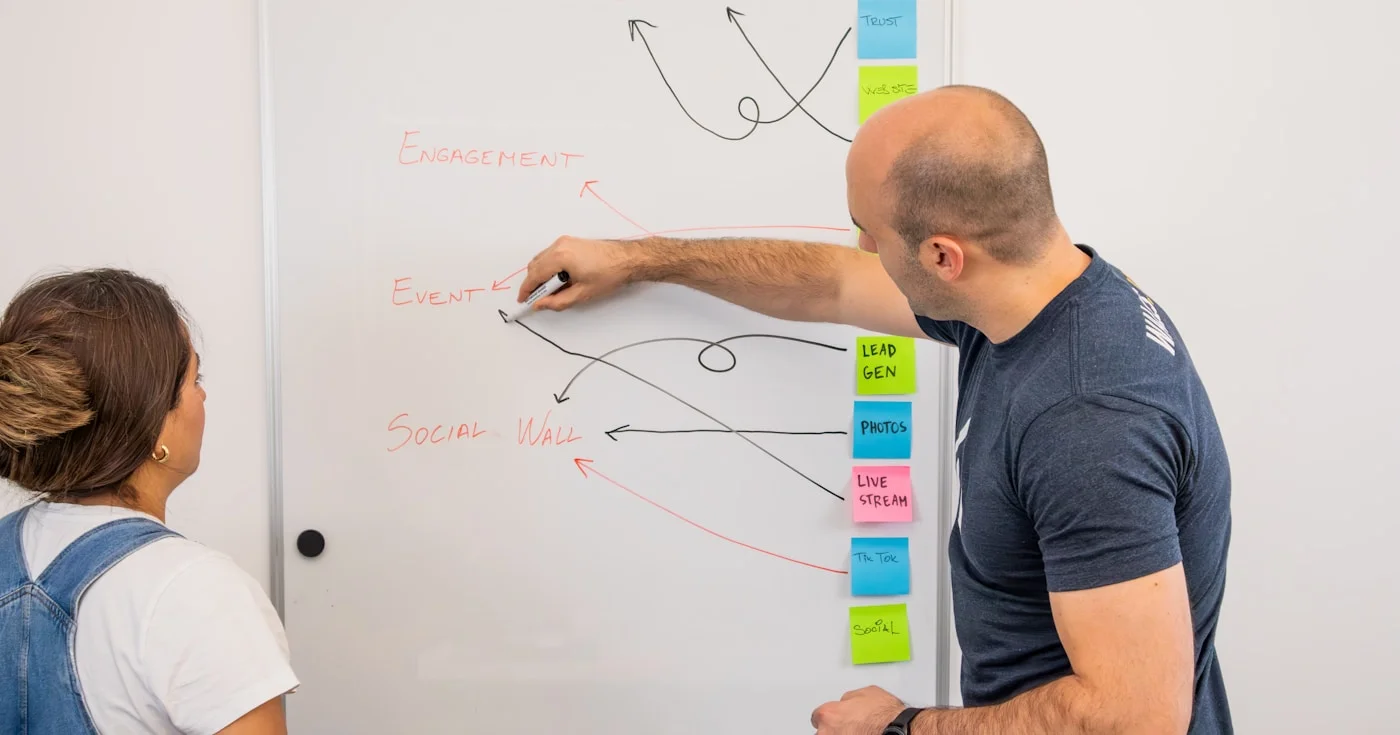

Learn the 5 stages of the design thinking process, from Empathize to Test. Includes the Double Diamond model, real case studies, tools, and common mistakes to a
The design thinking process is a human-centered, iterative methodology for solving complex problems by understanding user needs before jumping to solutions.
Developed at Stanford's d.school and commercialized by IDEO, it structures innovation into five stages: Empathize, Define, Ideate, Prototype, and Test. Companies that apply it well outperform peers by as much as 2 to 1 in revenue growth, according to McKinsey.
This guide covers every stage in detail, including specific methods, real company examples, and the tools UX designers and product teams use to run each phase effectively.
The design thinking process is a structured approach to innovation that starts with empathy for people rather than assumptions about what they need. It was popularized by David Kelley (founder of IDEO) and Tim Brown (IDEO's CEO), and formalized as a teachable methodology by the Stanford's d.school.
Design thinking is different from traditional problem-solving. Most methods start with the problem as defined by internal stakeholders, then look for solutions. Design thinking starts by questioning whether you've defined the right problem in the first place.
As Harvard Business School Online puts it: design thinking is "solution-based and user-centric rather than problem-based." A team struggling with employee disengagement doesn't ask "how do we solve disengagement?" Instead, they ask "what do employees actually need to feel motivated?" The answer may be entirely different.
Design-driven companies outperformed the S&P 500 by 219% over a 10-year period, according to the Design Management Institute's Design Value Index.
McKinsey's 2018 study of 300 publicly listed companies found that businesses with high design maturity nearly twice the rate of their industry peers. And 92% of senior executives now say good design is critical for revenue growth.
For UX designers specifically, design thinking provides the problem discovery framework that agile sprints and Figma workflows don't cover. It answers "what should we build?" before you answer "how do we build it?"
Nielsen Norman Group describes the design thinking framework as following three larger buckets: understand, explore, and materialize. The five stages from Stanford fall inside this structure. Here's what each phase involves in practice.
The Empathize stage is where you build a genuine understanding of the people you're designing for. You're not surveying what users say they want in the abstract. You're observing how they actually behave, what frustrates them, and what they care about.
Methods used in this stage include:
The goal is to surface latent needs. These are the things users don't know they need until you see them struggle. As IxDF explains, this phase focuses on gaining "an empathic understanding of the problem you are trying to solve," which means consulting experts and directly observing users.
Once you've gathered user research, the Define stage turns raw observations into a clear, actionable problem statement. This is where synthesis happens.
Common methods include:
A well-written problem statement guides every decision that follows. Defining the wrong problem is the most expensive mistake in product development. You can build something perfectly and still ship something that doesn't solve the real issue.
The Ideate stage is about quantity before quality. You're generating a wide range of possible solutions before narrowing down. Avoid evaluating ideas as they surface, because premature criticism kills creative momentum.
Useful ideation techniques include:
The output of this phase is typically a shortlist of the most promising ideas, voted on by the team and evaluated against user needs, technical feasibility, and business viability.
Prototyping means building the cheapest possible version of an idea that lets you test a specific assumption. You're not building the product. You're building enough to learn.
Prototype fidelity scales with the question you're testing:
As Enterprise Design Thinking puts it: "Everything is a prototype." The mindset is one of restless reinvention. If the current version exists, it can be tested, questioned, and improved.
Testing means putting your prototype in front of actual users and observing what happens. You're not looking for validation. You're looking for surprises: moments where user behavior differs from your assumptions.
Testing methods include:
What you learn in Testing feeds back into earlier stages. If users can't complete a core task, you may need to revisit the Prototype stage. If they misunderstand the problem itself, you may need to return to Define. This is intentional. The loop is the process.
The Double Diamond was developed by the Design Council UK in 2004. It's now one of the most widely referenced design frameworks globally, with millions of citations on the web.
The framework uses two diamonds to represent cycles of divergent and convergent thinking:
First diamond (finding the right problem):
Second diamond (finding the right solution):
The Double Diamond is useful because it makes explicit something the five-stage model implies: that moving from divergence (exploring widely) to convergence (deciding and acting) happens twice. Once for the problem, once for the solution.
Both frameworks serve the same purpose. Which one you use depends on how your team thinks about the work.
IBM built its own design thinking framework called Enterprise Design Thinking to address a specific challenge: how do you apply design thinking across teams of hundreds or thousands of people, many of them remote?
IBM's adaptations include:
IBM has trained thousands of employees in this methodology, embedding design thinking into business units beyond the product team.
In early 2009, Airbnb was struggling. The platform existed, hosts were listing their properties, but bookings were flat. Founders Brian Chesky and Joe Gebbia flew to New York to visit hosts directly and observe what was happening.
They discovered the problem wasn't the concept. The listings had terrible photos. Hosts were using blurry smartphone shots that made rooms look unappealing. Chesky and Gebbia rented a camera, photographed the listings professionally, and replaced the bad photos.
Weekly revenue doubled almost immediately. The insight was only possible because they did what the Empathize stage demands: they got off the internet and went to see the actual situation firsthand.
This became the foundation of Airbnb's culture of "doing things that don't scale," starting with human contact rather than automation.
Stage | Tool | Best For | Free Plan |
|---|---|---|---|
Empathize | Research repository, tagging insights | No | |
Empathize | Remote user interviews | No | |
Define | Affinity mapping, collaborative synthesis | Yes | |
Define | Digital whiteboard, HMW exercises | Yes | |
Ideate | Brainstorming, Crazy 8s | Yes | |
Prototype | Wireframes and interactive prototypes | Yes | |
Prototype | Clickable prototypes, sharing | Yes | |
Test | Unmoderated usability testing | Yes | |
Test | Heatmaps, session recordings | Yes | |
Test | Moderated research sessions | No |
Companies that integrate user research into their design workflow have seen 415% ROI, according to UserTesting's 2025 Total Economic Impact study.
Many product teams use design thinking alongside agile and lean, not instead of them. Each framework answers a different question:
Methodology | Core question | Focus |
|---|---|---|
Design Thinking | What should we build? | Problem discovery |
Lean Startup | Should we build this at all? | Business validation |
Agile | When and how do we ship? | Delivery execution |
Design thinking operates upstream. It's most valuable before your team opens Jira, before you write user stories, and before you estimate sprints. Lean helps you validate whether the business model makes sense. Agile structures how you execute once you've aligned on direction.
Most effective product teams integrate all three: design thinking for discovery, lean for validation, agile for delivery.
The most common error is treating the Empathize stage as a checkbox. Teams hold a single stakeholder workshop, declare the problem defined, and move straight to ideation.
The result is solutions built on assumptions rather than user evidence. Enforce research checkpoints before ideation. Require that specific user observations support every problem statement.
Design thinking is explicitly non-linear. The stages are a vocabulary for the work, not a waterfall. If user testing reveals that you defined the wrong problem, going back to the Define stage isn't a failure. It's the process working correctly.
Teams that treat design thinking as a one-pass sequence often ship solutions that miss the mark because they never let new learning update their assumptions.
Design thinking requires cross-functional teams. When only designers participate in the process, you lose the technical perspective (what's feasible) and the business perspective (what's viable). You also lose the engineers and product managers who ultimately build and own the product.
IBM's Enterprise Design Thinking addresses this directly: its "diverse empowered teams" principle brings people with different skills and backgrounds into the process, generating more breakthrough ideas faster.
Design thinking workshops are common. Genuine design thinking practice is less common. There's a real difference between running an afternoon brainstorming session and building an organization-wide capability for empathy-driven product development.
Design thinking treated as a one-off workshop produces wasted resources, not sustained innovation. Build it into your process, not just your calendar.
The sweet spot for design thinking is the intersection of three forces: what users need (desirability), what technology can deliver (feasibility), and what the business can sustain (viability). Focusing only on user desirability produces concepts that can't be built or monetized.
Every idea that comes out of ideation should be evaluated against all three dimensions before prototyping.
If you work in UX, you already practice components of design thinking without labeling them that way. User interviews, journey mapping, and prototype testing are all part of the same lineage. What the process adds is a deliberate framing for when each activity belongs.
Before any wireframes or user flows, run the Empathize stage. Treat user research as a prerequisite, not an optional step. The Define stage turns your observations into a problem statement that your team actually agrees on before anyone opens Figma. This prevents the common situation where designers are building something and everyone has a slightly different mental model of what problem it's solving.
The Ideate stage works best when it's cross-functional. Invite an engineer and a product manager into your brainstorming sessions. Engineers know what's technically possible, which shapes which ideas are worth prototyping. Product managers understand the business constraints, which helps filter ideas before you invest time building them.
Prototyping in UX is where design thinking and your existing tools overlap most naturally. Figma wireframes are prototypes. Clickable mockups are prototypes. Run them through testing before any sprint commits to building the underlying functionality. The cost of learning from a Figma prototype is close to zero compared to the cost of learning from a shipped feature that missed the mark.
For deeper reading on specific UX practices that connect to each stage, see our guides on UX research methods, how to create a user journey map, and usability testing.
The design thinking process gives UX teams a systematic way to ask better questions before building solutions. Starting with Empathize ensures you understand real user needs. The Define stage sharpens the problem. Ideate expands possibilities. Prototype makes ideas concrete. Test validates them with evidence.
The process works because it's iterative, not because it's sequential. Your first prototype will teach you things your research did not. Your first round of testing will likely send you back to earlier stages. That is not a sign of failure. It is the process working as designed.
If you're starting out, begin with one thing: schedule three user interviews before your next design kickoff. Let what you hear reshape how you define the problem.
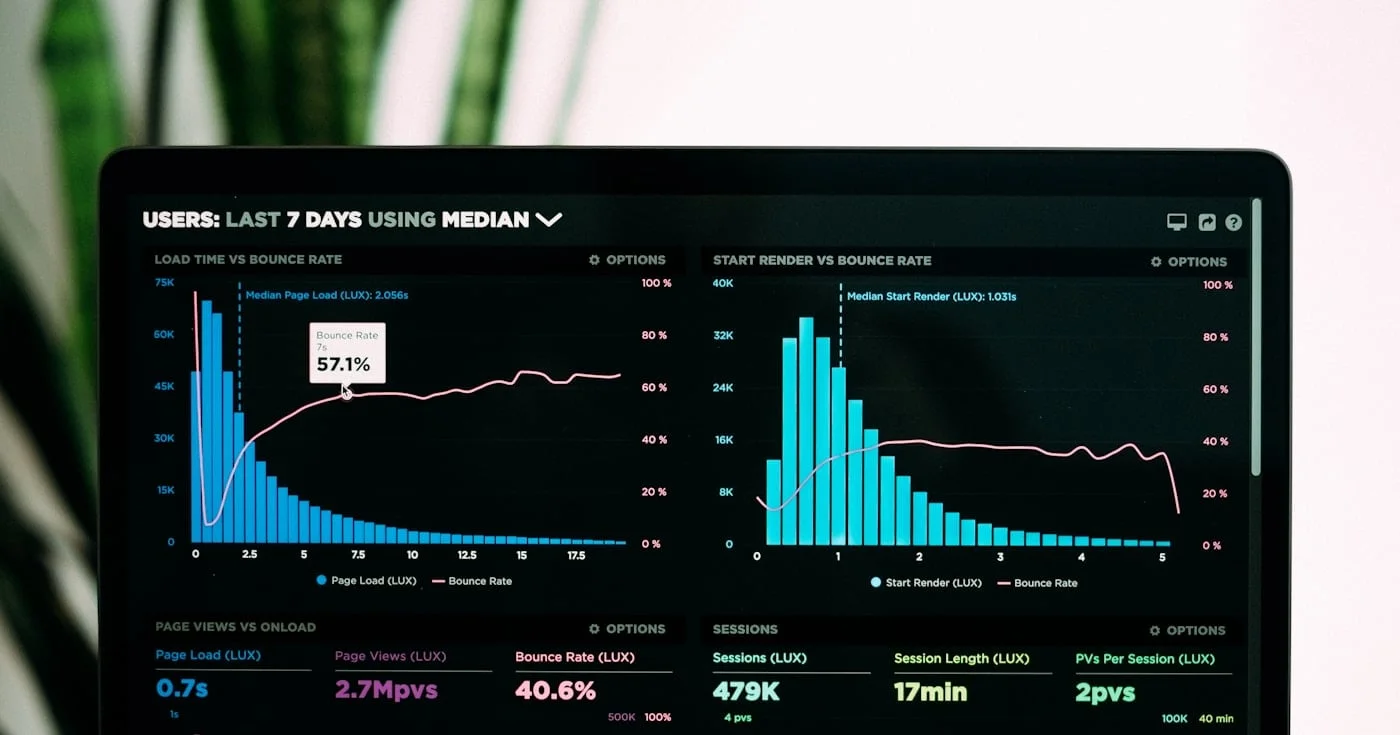
US product manager salary is three samples: posted cash near $180k, SMB payroll near $132k, tech TC $230k. 42 stats by level, stage, and region for 2026.
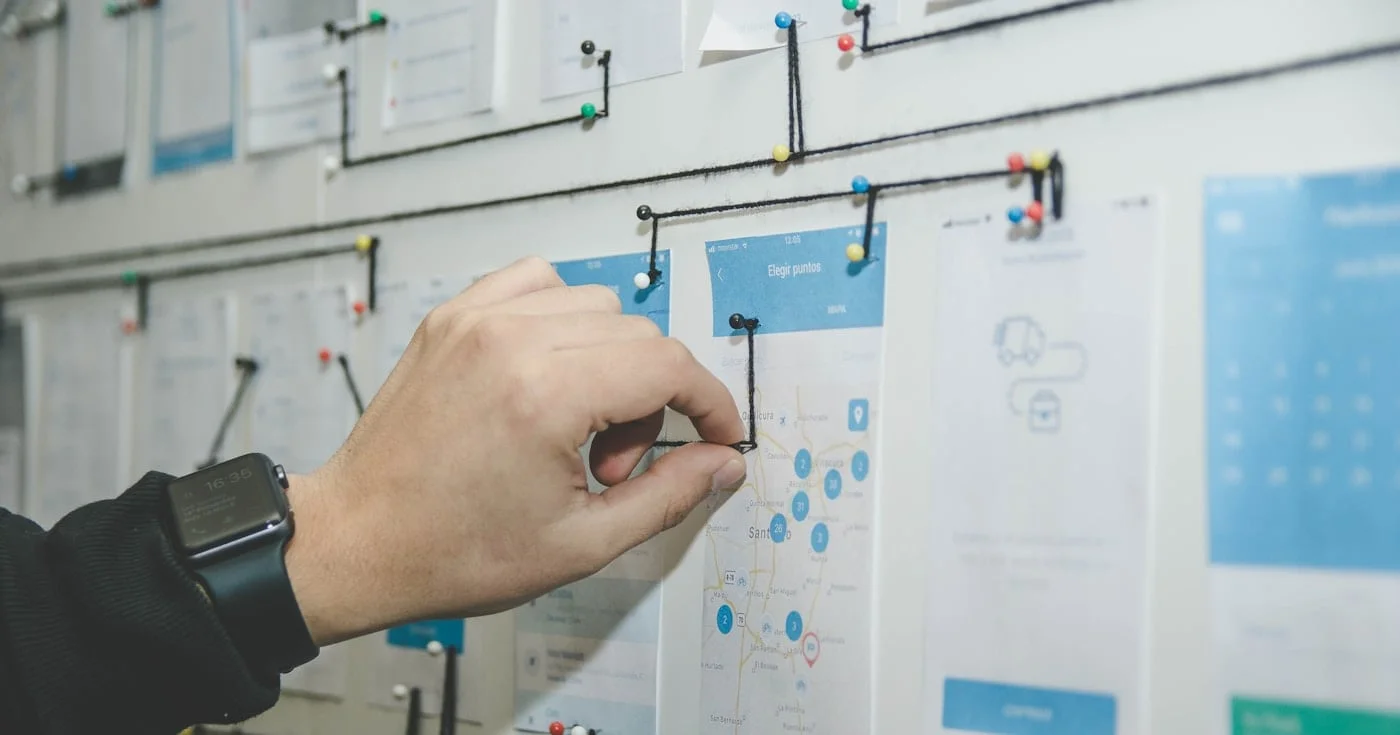
Product strategy is where-to-play and how-to-win choices, including the work the roadmap will omit.
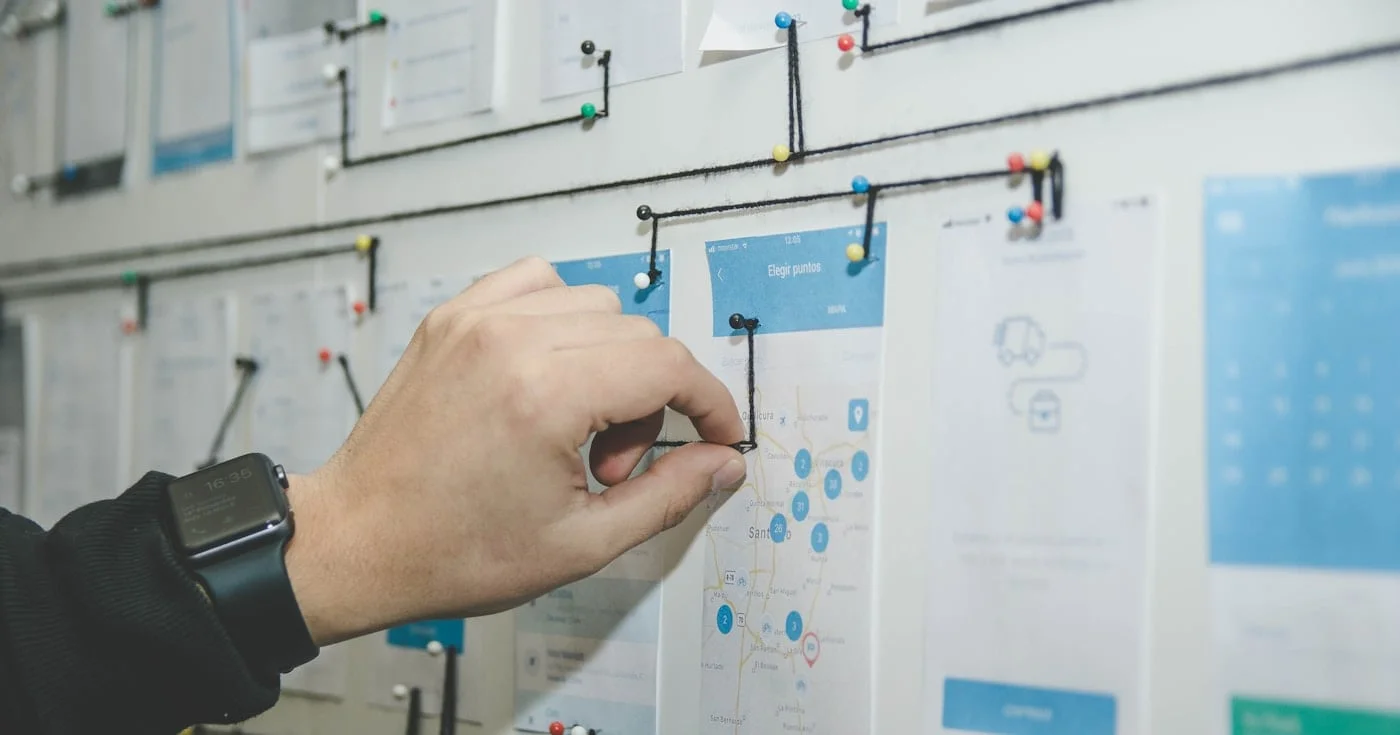
The MoSCoW method sorts a timeboxed release into Must, Should, Could, and Won't this time. ABC tests, the 60% effort cap, and where the four buckets collapse.
